
SECURE OPEN SOLUTIONS
BC / DR / BIA
Understand disruption impacts, prioritize recovery and prepare people, systems and plans to keep critical operations moving.
Explore the details
Business Continuity
Business continuity keeps priority services functioning when normal operations are disrupted. It addresses people, communications, facilities, suppliers, information and technology, including temporary arrangements that allow critical work to continue before full recovery.
What this includes
- Identify priority services and the resources required to deliver them
- Define activation, escalation, communications and alternate working arrangements
- Exercise business scenarios and assign improvements to owners
Teams understand which activities must continue, which can wait and how to coordinate during disruption. Plans describe workable alternatives, not just a list of systems to restore. The review should retain continuity roles and activation criteria so the team can explain the decisions later.
Explore details →Disaster Recovery
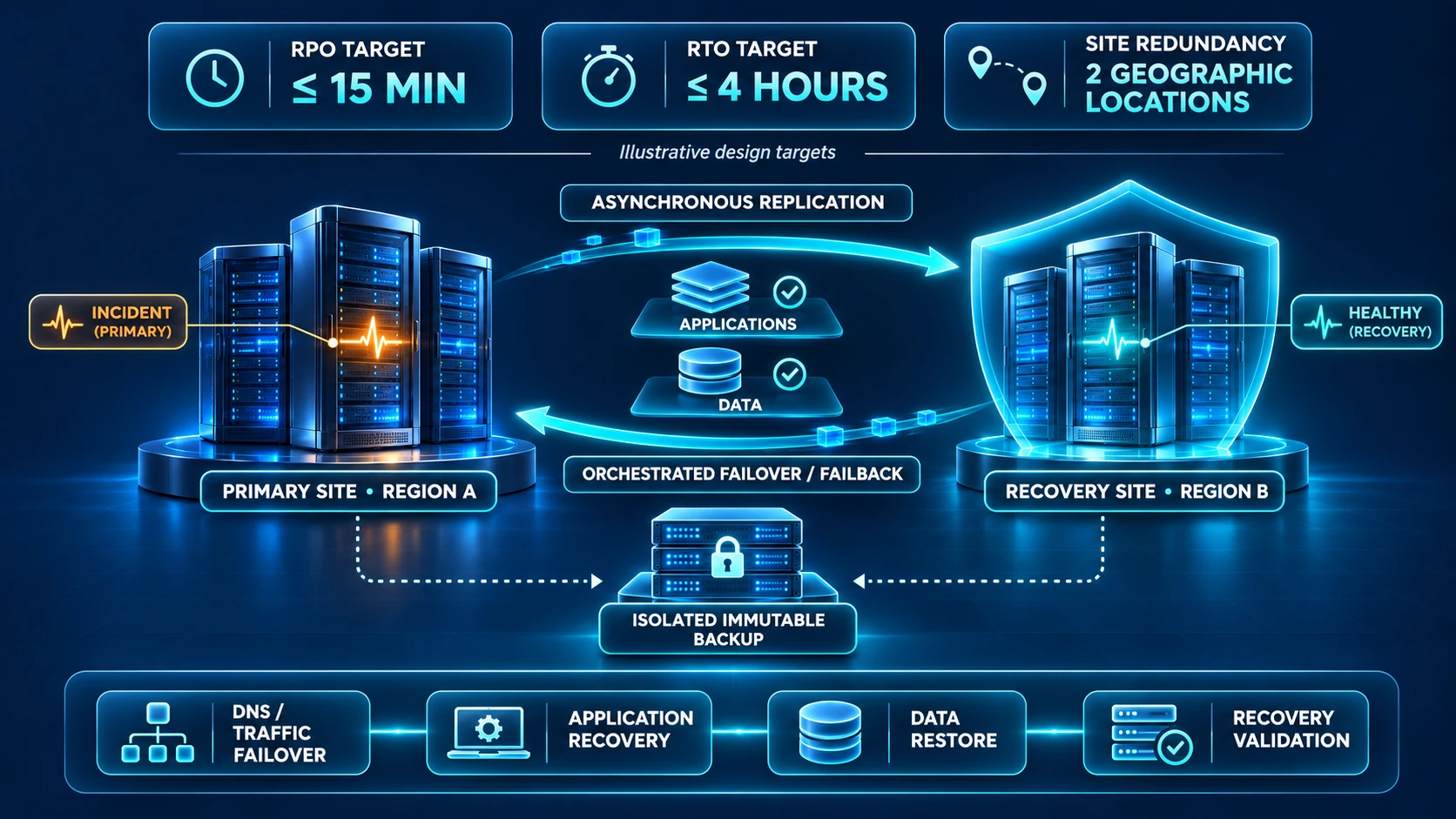
Disaster recovery restores technology and data after a disruption. Its priorities should follow business needs, with recovery time and acceptable data-loss objectives tested against real backup, replication, infrastructure and staffing capabilities.
What this includes
- Identify recovery dependencies, restoration sequence and decision owners
- Define backup, replication, alternate-site and failover procedures
- Test restoration, validate service behavior and track corrective actions
A recovery playbook explains what to restore first, who performs each step and how recovery is accepted. Test results show whether proposed RTO and RPO targets are achievable under the exercised conditions. The review should retain sequenced recovery runbooks so the team can explain the decisions later.
Explore details →Business Impact Analysis
A business impact analysis explains how disruption affects the organization over time. It identifies critical processes, their dependencies and the consequences of interruption so that recovery priorities and proposed objectives have an agreed business rationale.
What this includes
- Interview process owners about outputs, deadlines and interruption impacts
- Map technology, staffing, supplier, facility and information dependencies
- Agree recovery priorities and document assumptions for validation
Leaders receive a prioritized view of what matters most and why. The BIA informs continuity and recovery choices, including which objectives need investment or further testing. The review should retain process criticality and dependency map so the team can explain the decisions later.
Explore details →Resiliency
Resiliency is the ability to withstand disruption, adapt operations and recover essential services. It combines prevention, redundancy, continuity arrangements, recovery capability and organizational learning instead of depending on a single backup product or secondary site.
What this includes
- Identify concentrated dependencies and plausible disruption scenarios
- Evaluate redundancy, alternate suppliers and graceful operating modes
- Exercise failure conditions and track improvements through retesting
The organization understands where a failure can interrupt essential work and how protection, continuity and recovery reinforce each other. Improvement priorities are tied to evidence from realistic scenarios. The review should retain single-point-of-failure and dependency review so the team can explain the decisions later.
Explore details →Scope and Deliverables
A useful continuity and recovery engagement begins with a defined boundary, an agreed outcome and a clear division of responsibilities. Scope makes the work understandable before estimates and schedules are finalized, and deliverables describe what the customer will be able to review or use.
What this includes
- Confirm the systems, business needs, applicable requirements and delivery constraints
- Agree roles, inputs, exclusions, acceptance criteria and review milestones
- Identify the records, procedures and implementation work needed to support the outcome
The result is a practical statement of work with reviewable outputs and accountable owners. Assumptions and dependencies remain visible so changes can be assessed before they affect cost or schedule.
Explore details →