
SECURE OPEN SOLUTIONS
SSDF
Build security into development, releases and vulnerability response, with evidence your customers can review.
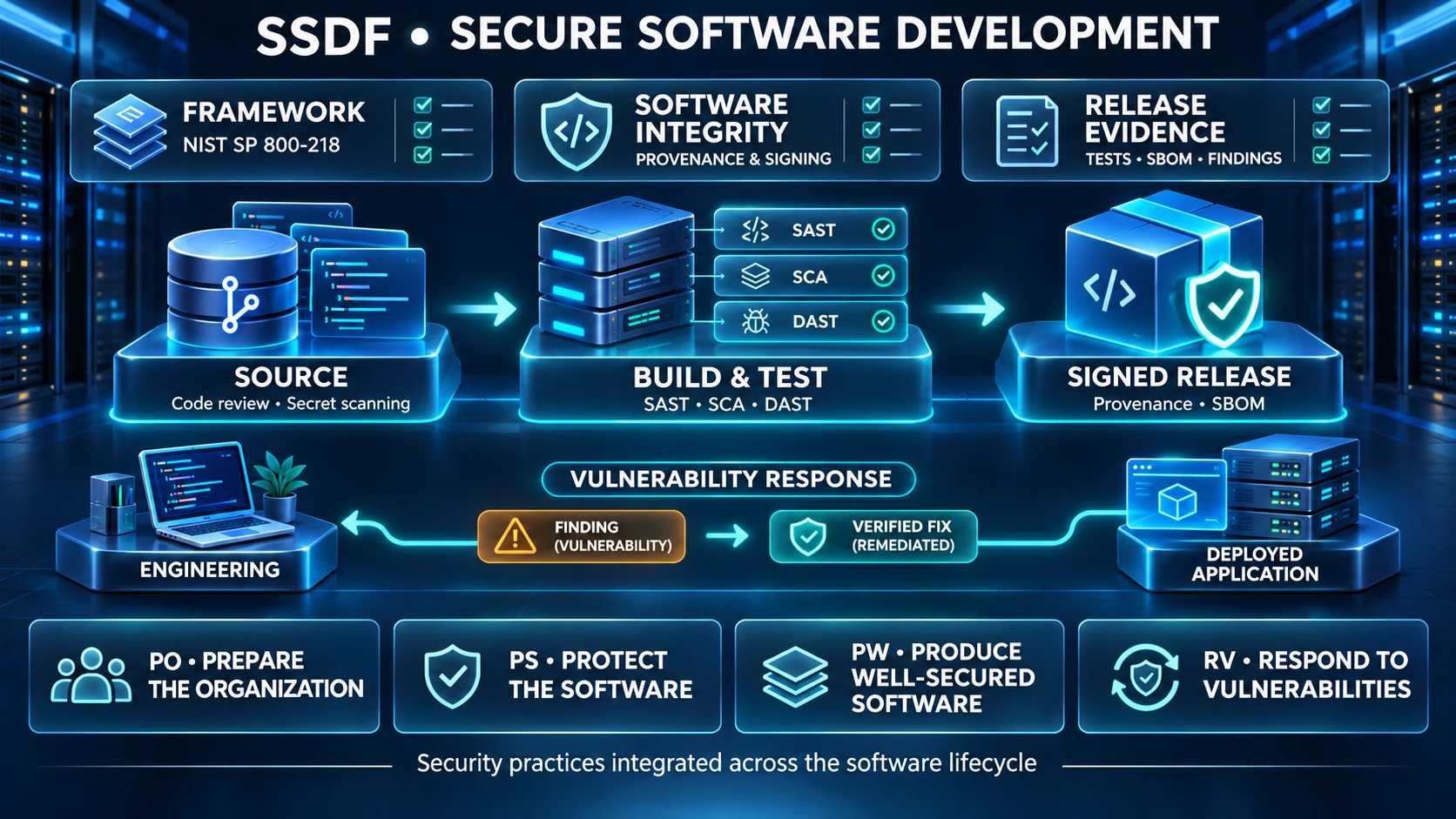
Explore the details
Prepare the Organization
Secure development begins with clear responsibilities and a delivery environment that supports them. Preparation aligns development, security, operations and product leadership on the practices, tools, skills and release expectations that the team will actually follow.
What this includes
- Assign secure-development roles and decision responsibilities
- Define training, toolchain protections and security requirements
- Set review checkpoints and criteria for handling exceptions
Teams know which security activities belong in delivery and who is accountable. Preparation produces working practices that can be applied consistently across projects, rather than a policy that engineers cannot implement. The review should retain development responsibility matrix so the team can explain the decisions later.
Explore details →Protect the Software
Software protection covers source code, development resources and release artifacts. The objective is to prevent unauthorized changes, preserve software integrity and maintain a trustworthy chain between approved source, the build process and the package delivered to customers.
What this includes
- Review repository permissions, branch protections and administrative access
- Protect build credentials, signing materials and artifact repositories
- Retain integrity and access records for released software
The team can explain who may change software, how changes are controlled and how delivered artifacts are protected. Recovery and investigation are supported by traceable records. The review should retain repository and build-access model so the team can explain the decisions later.
Explore details →Produce Well-Secured Software
Producing well-secured software means applying security thinking during design, implementation, review and testing. The work combines sound engineering with checks suited to the software’s architecture, dependencies and operating environment.
What this includes
- Identify abuse cases and security requirements during design
- Review changes, dependencies and security-sensitive implementation choices
- Test relevant behavior and disposition findings before release
Security findings enter the same accountable delivery process as other engineering work. Evidence shows which practices were applied, what was found and how release decisions were made. The review should retain design and code-review records so the team can explain the decisions later.
Explore details →Respond to Vulnerabilities
Vulnerability response connects reports and technical findings to triage, remediation, communication and prevention. It must work after release, when users and customers may depend on the affected software and fixes may require coordinated deployment.
What this includes
- Establish reporting channels and assign triage responsibilities
- Evaluate affected versions, exposure and remediation priorities
- Verify fixes and use root-cause analysis to improve development
The team has a repeatable way to handle findings from discovery through closure. Customers can receive appropriate information while engineering tracks which versions, fixes and follow-up actions are affected. The review should retain triage and remediation workflow so the team can explain the decisions later.
Explore details →Source and Review
Source control is where proposed software changes become an accountable record. Review practices should make the change’s purpose, author, approval and relevant security considerations visible before code enters a trusted branch.
What this includes
- Define repository access and branch protection rules
- Review changes and detect secrets or unsafe patterns
- Link approvals, checks and exceptions to the change record
A reviewer can follow a software change from its request through approval and testing. The team can distinguish reviewed work from emergency exceptions and unauthorized modifications. The review should retain repository governance and access decisions so the team can explain the decisions later.
Explore details →Build and Test
A secure build process turns approved source into a reproducible and reviewable delivery activity. Testing checks the software and its dependencies, while the build environment protects the credentials, tools and artifacts used to produce a release.
What this includes
- Define controlled build inputs, runners and dependency handling
- Integrate relevant static, component and dynamic checks
- Record findings, exceptions and artifact generation results
Build and test evidence supports release decisions and later investigation. Teams can identify what was built, which checks ran and which unresolved findings were accepted for further review. The review should retain controlled build workflow so the team can explain the decisions later.
Explore details →Release Integrity
Release integrity connects the software delivered to customers with its approved source, build process and recorded components. Provenance, signing and component inventories help explain what was released and support later vulnerability and incident investigations.
What this includes
- Link release artifacts to approved source and build records
- Protect signing operations and distribution channels
- Maintain component and version records, including an SBOM where required
Customers and internal teams can identify a release and trace its origin. The organization can respond more quickly when a component or build process is later found to be affected. The review should retain release manifest and provenance records so the team can explain the decisions later.
Explore details →Scope and Deliverables
A useful secure software development engagement begins with a defined boundary, an agreed outcome and a clear division of responsibilities. Scope makes the work understandable before estimates and schedules are finalized, and deliverables describe what the customer will be able to review or use.
What this includes
- Confirm the systems, business needs, applicable requirements and delivery constraints
- Agree roles, inputs, exclusions, acceptance criteria and review milestones
- Identify the records, procedures and implementation work needed to support the outcome
The result is a practical statement of work with reviewable outputs and accountable owners. Assumptions and dependencies remain visible so changes can be assessed before they affect cost or schedule.
Explore details →